Make America Funk Again Sir Nose

Bernie Worrell, Grady Thomas, unident., Fuzzy Haskins, George Clinton, Tiki Fulwood, unident., Michael Hampton, unident., Calvin Simon of the funk band Parliament-Funkadelic pose for a portrait in circa 1974. Michael Ochs Archives/Getty Images hide caption
toggle explanation
Michael Ochs Athenaeum/Getty Images
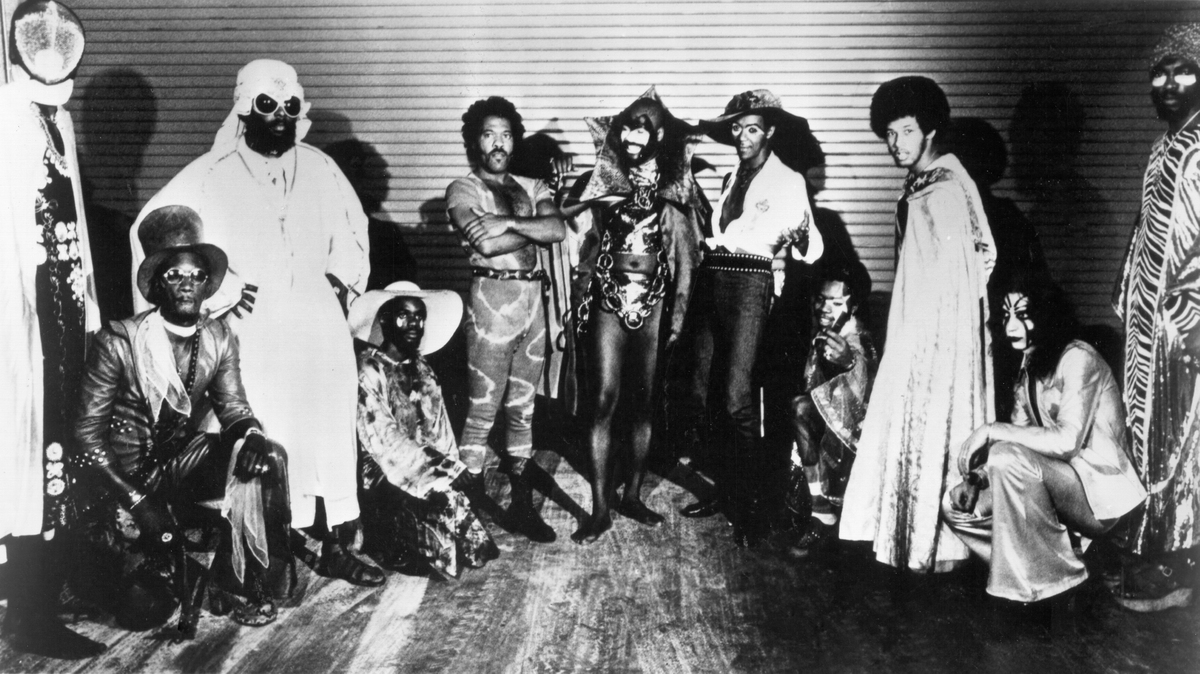
Bernie Worrell, Grady Thomas, unident., Fuzzy Haskins, George Clinton, Tiki Fulwood, unident., Michael Hampton, unident., Calvin Simon of the funk ring Parliament-Funkadelic pose for a portrait in circa 1974.
Michael Ochs Archives/Getty Images
Updated at 5 p.thousand. ET.
I want to take a moment to remember and appreciate Bernie Worrell, the former keyboard star of Parliament-Funkadelic, who has died after being diagnosed with tardily-stage lung cancer.
George Clinton is the front-man and mastermind recognized for building the sprawling musical ensembles of 10-15 musicians at a time known as Parliament-Funkadelic. But Worrell, a co-founder of those groups, chose to play away from the spotlight. Compared to Clinton, he seemed downright humble --and by well-nigh acounts he really was humble.
Worrell was a child prodigy from New Bailiwick of jersey. He studied at Julliard and the New England Conservatory of Music, blistering his cognition and artistry into an indelible post-James Brown manner of funk. Worrell'southward contributions — all those otherworldly synth sounds and earthy piano bass lines — are easy to find in the Parliament-Funkadelic repertoire of hits and B-sides. They are indelibly spooky, funky and thrilling. Bernie's fingers created memorable sound textures and musical ideas on the same track.
YouTube
The opening seconds of "Flashlight" show why Worrell is and so important to the sound of Parliament. After a furious set of funky drumbeats count off the vocal, Bernie Worrell'due south joyful synthesizer squeals and twists high notes while fat bouncy bass lines command me to interruption free whatsoever tensions and find the beat. I love "Flashlight" because it's an anthem to giving in to desire, letting go and just dancing — whatever you interpret "dance" to hateful.
The song alludes to the character Sir Nose D'Voidoffunk, who talks on the recording and other tracks in a quirky drawing-y voice. He declares ,"I will never dance." The Sir Nose persona is a kooky nod to the romantic hero of the French comedy Cyrano De Bergerac. Cyrano, like Sir Nose, has problems with cocky-dubiety and acceptance. The backing vocals of Flashlight keep rejecting Sir Nose's protests. "Nigh of all, he needs the funk," they say, breaking down his resistance.
Sir Nose is a proxy for whatsoever black person devoid of funk, and in need of a life more colorful, more emotional, more than black, more connected to being sexual and sexy. I felt that song's coda — "Everybody's got a little lite under the lord's day" — was written especially for me.
I grew up a lonely black student commuting from the far Westward Side of Chicago to nourish a predominantly white, all-boys Catholic prep school in a close-in suburb. I was expected to be responsible, study hard, and to act appropriately at all times.

Bootsy Collins (top left), Grady Thomas (3rd from left), George Clinton (4th from left), (bottom row) Calvin Simon, Ray Davis, Bernie Worrell, Fuzzy Haskins, Michael Hampton of the funk band "Parliament-Funkadelic" pose for a portrait in circa 1977. Michael Ochs Athenaeum/Getty Images hide caption
toggle explanation
Michael Ochs Athenaeum/Getty Images
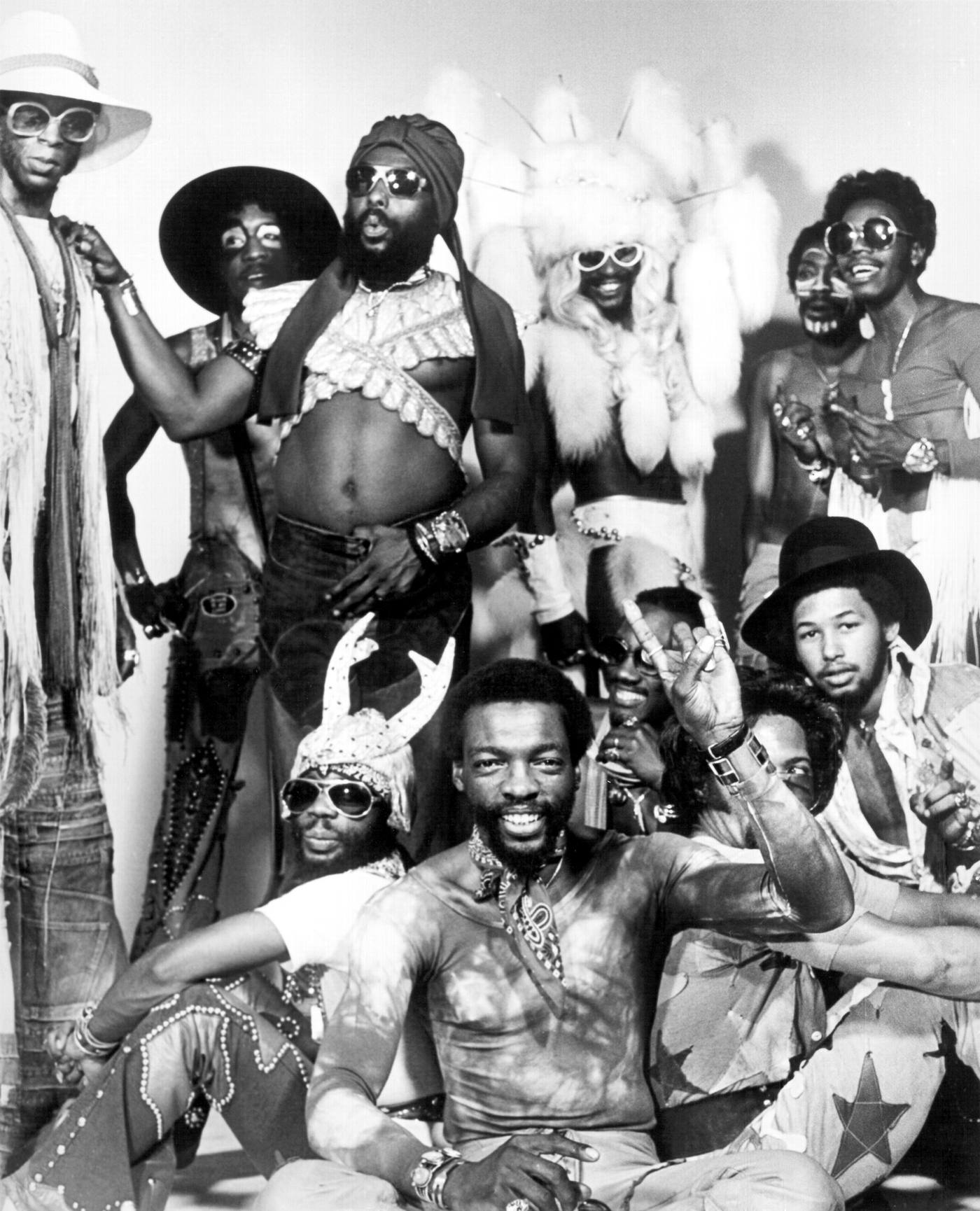
Bootsy Collins (summit left), Grady Thomas (3rd from left), George Clinton (4th from left), (bottom row) Calvin Simon, Ray Davis, Bernie Worrell, Fuzzy Haskins, Michael Hampton of the funk band "Parliament-Funkadelic" pose for a portrait in circa 1977.
Michael Ochs Archives/Getty Images
My begetter'due south house rules consisted often of no, no and not a chance to hanging out with friends, coming together girls or getting to parties at the weekend. He came from a highly segregated time and place, the first in his family to graduate college, and he wanted us to follow his case, if not practise even better. If he kept the possibility of cars, drugs, booze and girls out of reach, he thought he could predict our futures with confidence.
His fears were not merely about me as a teenager, but me as a black male person teenager. He wanted to enhance his sons into good men, and to be seen that way, too. I was in one case stopped by police officers in Oak Park, a mile from dwelling, because they refused to believe I was riding my own bike through the neighborhood. My father came to the station incensed that white officers were accusing me of anything merely quietly enjoying myself on a summertime's day.
My escape from rules and the steady drumbeat of "no" was music. I went to Globe, Wind & Burn for uplift. But Parliament offered me a less squeaky-make clean picture of what blackness could be. The 1-ii punches of Clinton and Worrell on tunes like "Chocolate Metropolis" and "P-Funk" helped me expand my sense of self.
Parliament'southward novelty songs, with all their stagy, dramatic, corny scenarios, delivered powerful messages virtually beingness black through blasphemy. The music was dangerous, irresistible — fabricated me want to sing out loud. I felt a bright flash of recognition, a nod to the fact that I was participating in art created with black people in mind first, if not exclusively.
"What's happening C.C.?," George Clinton asks with swagger to everyone listening to the song "Chocolate Urban center." This "Chocolate City" — imaginary and magical — was real to those of us in the know. Just past hearing those words, I entered a sonic place to exist myself, no matter what else was happening outside the sanctuary of the song. "They call information technology the White House," Clinton's alter ego adds, "but that's a temporary condition."
Such lines — hopeful, defiant, and vaguely prophetic — held sway with me in the 1970s, and I was far from lone feeling that way.
Worrell'south keyboards set the atmosphere for these allusive, fun and funny songs. His piano and synth accompanied all those sneaky, insider-ish ideas.

(Clockwise from left) Drummer Tiki Fulwood, guitarist Tawl Ross, keyboardist Bernie Worrell, Billy "Bass" Nelson, and guitarist Eddie Hazel of the funk group Parliament-Funkadelic pose for a portrait in 1971. Michael Ochs Archives/Getty Images hide caption
toggle caption
Michael Ochs Archives/Getty Images

(Clockwise from left) Drummer Tiki Fulwood, guitarist Tawl Ross, keyboardist Bernie Worrell, Billy "Bass" Nelson, and guitarist Eddie Hazel of the funk group Parliament-Funkadelic pose for a portrait in 1971.
Michael Ochs Archives/Getty Images
Worrell, Clinton and others in the grouping conveyed that being black has liabilities, only information technology is also a powerful gift. Their tunes winked at the drawbacks faced past people of color while illuminating a path to the fun. Their bands continued with cult followers and political party animals of every age and color.
And with shut-ins like me. On the unmarried "P-Funk," subversive words pepper notions of black solidarity. I could choose to deconstruct the song, or just dance and sweat. I could be establish grooving side by side to the kitchen radio, while my brothers and father watched TV in the living room. Then, the chorus kicked in: "Make my funk a P-funk...I wants to get funked upward..." Even when I was grounded, Parliament cleared me for take-off.
Over the years, Parliament-Funkadelic records worked their subversive magic on me. They pushed dorsum at my fears of being perceived as too black or independent. They invited me to become over the hump. To persevere and sally whole, to turn on and tune in, swim, dance and be me. With lyrics I can't echo hither, they made anthems to freeing yourself and musical fables about the perils of beingness too buttoned down, too center class, too uppity to go downwardly and dirty.
On schoolhouse nights, while washing dishes, I played their music, knowing that past the weekend, my classmates would exist at "the set," meeting and rapping to young ladies, while I'd even so be glued to my radio at home. Their crazy songs kept me sane.
I urge y'all to download or search the internet for "Mothership Connection (Star Child)" or "P-Funk" or "Chocolate Metropolis," "(Not Just) Genu Deep" or "Flashlight." (For extra credit, listen to the Talking Heads' "Burning Downward The House" and "Girlfriend Is Better" for the wild creative energy Bernie Worrell added to their songs.) Just turn information technology up, and just let your focus be the keyboards. Feel how brightly Bernie Worrell shines for the ages.
Source: https://www.npr.org/sections/codeswitch/2016/06/24/482788572/on-parliament-funkadelic-and-a-less-squeaky-clean-picture-of-blackness
0 Response to "Make America Funk Again Sir Nose"
Post a Comment